
Across the country, children are navigating a digital environment that is always on, always available, and often unregulated. Studies show that Filipinos spend an average of 3.5 hours a day on social media, while global and local reports indicate that 1 in 3 Filipino students experience bullying, with cyberbullying affecting nearly half of young users. The Philippines continues to rank among the highest globally in bullying prevalence, both offline and online.
At Stairway Foundation, we see the impact every day, from classrooms to remote communities. What was once dismissed as “too much screen time” is now being recognized globally as something far more serious.
A Turning Point: From Habit to Public Health Crisis
The “Slot Machine” in Every Pocket
- Variable Rewards
Endless scrolling and “pull-to-refresh” features keep users hooked just like a slot machine. - Social Validation
Likes, shares, and follower counts tap into a child’s deep need for belonging and approval—especially during adolescence. - Algorithmic Control
Platforms are designed to maximize attention—not to show what is healthy or true.
For a developing child, this environment can profoundly shape behavior, identity, and emotional well-being.
The Philippine Reality: A Nation at Risk
In the Philippines, the risks are amplified by accessibility and culture. Children in urban and remote communities now have 24/7 internet access through mobile data, piso Wi-Fi, and even satellite links in schools. Access, once limited, is now constant. At the same time, mental health issues among Filipino youth are rising.
Screen exposure is linked to:
- Higher levels of anxiety and depression
- Sleep disruption and reduced attention spans
- Increased exposure to cyberbullying, exploitation, and harmful content
Recognizing these risks, policymakers are beginning to respond. Proposed measures such as House Bill 8262 aim to regulate social media access for minors, reflecting growing concern about its impact on child development.
When Advocacy Meets Policy
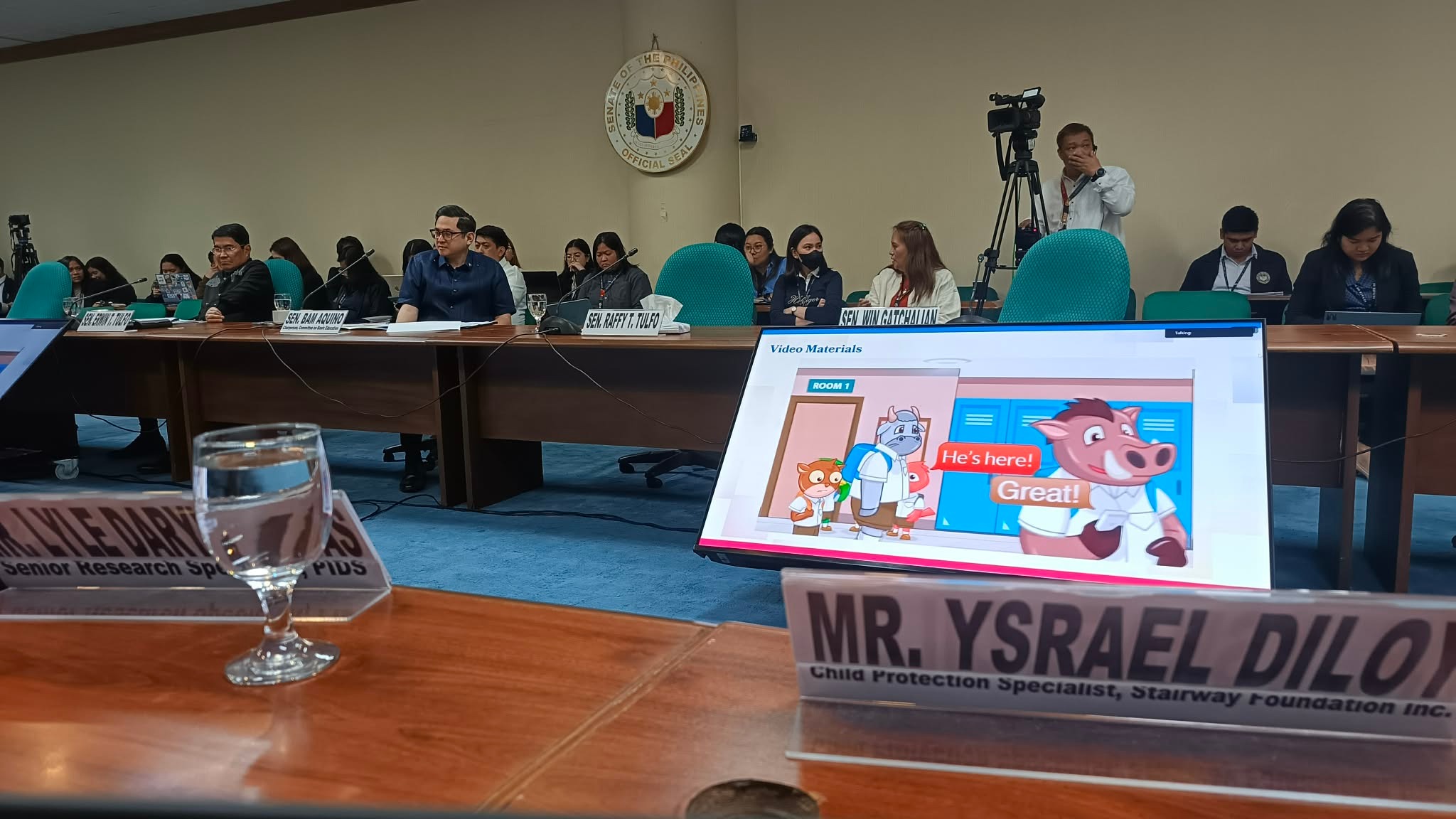
At the national level, Stairway Foundation advocates for stronger child protection laws while serving as a resource for policymakers, ensuring that children’s experiences inform decision-making. Through our Safeguarding, Training, and Consultancy Unit (STCU), Stairway helps the Philippine Congress understand children’s lived experiences for policy-making. During a recent Senate committee hearing on amendments to the Anti-Bullying Act of 2013, Stairway’s animation “Be a Buddy, Not a Bully” was featured as part of the Department of Education presentation. It was a powerful moment, showing that creative, child-centered advocacy can influence national conversations and build safer environments for children.
- Amendments to Republic Act No. 11930
- The proposed Child Online Protection Bill
These efforts reflect a recognition that bullying, addiction, and online exploitation form an interconnected crisis requiring urgent, collective action.
Rethinking Childhood: A Way Forward
Experts propose a shift away from a “phone-based childhood” toward one grounded in real-world interaction.
- Delay smartphones until at least high school age.
- Limit social media use until age 16.
- Create phone-free schools to encourage focus and connection.
- Encourage independent play to build resilience and social skills.
For Filipino families, these are not just policies—they are practical steps to reclaim childhood.
Our Commitment: A Voice for Every Child
From remote communities like Sipit Saburan to the halls of Congress, Stairway’s mission remains the same: protection for every child. We witness daily how the digital world can both empower and harm. That’s why we work at all levels—from grassroots education to legislation—to keep children safe, informed, and heard.
Because technology should serve children—not shape or silence them.
What You Can Do
- Create screen-free moments
Plan a weekly “digital detox” day where all family members unplug from devices and focus on shared activities try board games, nature walks, or storytelling together. - Stay informed and speak up.
Write to your local representatives, participate in public forums, and support legislation that makes the digital environment safer for children. - Encourage real-world play
Offer children choices for hands-on play, exploration, art, or outdoor adventures show interest and join them to strengthen connections beyond screens.
A child’s worth is not measured in likes or views. It is defined by the safety, dignity, and happiness that are guaranteed each day. Every child deserves unwavering protection and support.